
Skip to Content
xtroverso
  • SERVICES
    • SCOPE OF WORK
    • PRICING
    • Year-End and Board Reporting
    • Employer & Payroll Support
    • Transition and Reconstruction
  • HOW IT WORKS
    • HOW XTROVERSO™ WORKS
    • Client Journey
    • Already a Client?
    • FAQ
  • FRAMEWORK
    • WHY XTROVERSO™
    • Framework and Controls
    • Verification and Compliance Checks
    • Cultural Manifesto
  • KNOWLEDGE
  • ABOUT
  • CONTACT
  • JOBS
  • 0
  • 0
  • Nederlands English (US)
  • Sign in
  • CLIENT AREA
xtroverso
  • 0
  • 0
    • SERVICES
      • SCOPE OF WORK
      • PRICING
      • Year-End and Board Reporting
      • Employer & Payroll Support
      • Transition and Reconstruction
    • HOW IT WORKS
      • HOW XTROVERSO™ WORKS
      • Client Journey
      • Already a Client?
      • FAQ
    • FRAMEWORK
      • WHY XTROVERSO™
      • Framework and Controls
      • Verification and Compliance Checks
      • Cultural Manifesto
    • KNOWLEDGE
    • ABOUT
    • CONTACT
    • JOBS
  • Nederlands English (US)
  • Sign in
  • CLIENT AREA

The VAT Mistakes That Surface During a Tax Audit

Small administrative habits that quietly turn into financial corrections
  • All Blogs
  • LINDA PAVAN
  • The VAT Mistakes That Surface During a Tax Audit
  • March 4, 2026 by
    Linda Pavan


    A VAT audit rarely starts with drama. It starts with numbers: invoices issued, invoices received, VAT declared, VAT reclaimed. For most small business owners, those numbers are simply part of the rhythm of the quarter. You send your invoices, pay your suppliers, file your VAT return and move on. Until, sometimes years later, the Belastingdienst reviews your administration and small inaccuracies suddenly become payable corrections. That is when bookkeeping turns into cash flow.

    The most common VAT mistakes are rarely about intent. They are about routine. An invoice without the correct VAT number. VAT reclaimed on a cost that is partly private. Applying the wrong VAT rate because “it’s usually 21%.” Or forgetting to adjust VAT when an invoice remains unpaid for too long. None of these feel dramatic in the moment. But during a tax audit, VAT is reviewed line by line. If the underlying invoice does not meet the formal requirements, the VAT deduction can be denied. And denied VAT is not an accounting issue; it is money that must be repaid.

    One point that is often overlooked is the supplier itself. Before reclaiming VAT, you are expected to check whether your supplier is actually a registered business with a valid VAT number and listed at the Kamer van Koophandel (KvK), the Dutch Chamber of Commerce. This is not about distrust; it is about due diligence. If the VAT number on the invoice is invalid, inactive, or does not match the company details, the tax authorities may refuse your VAT deduction. In that case, you carry the cost, even if you paid the invoice in good faith.

    I regularly see this with new or one-off suppliers. A quick online check of the VAT number in the European VIES system, and a check in the KvK register, takes minutes. Yet if it is skipped, the risk sits quietly in your administration. During an audit, that risk becomes visible immediately. The inspector will verify whether the supplier legally existed at the time of invoicing. If not, the VAT is simply not deductible.

    Another recurring issue is the difference between revenue and payment. VAT in the Netherlands is generally due when you issue the invoice, not when you receive the money. That means you may already have paid VAT on revenue that is still sitting in your debtor list. If that invoice later proves uncollectible, you must actively correct the VAT. If you do nothing, you finance the tax yourself. During an audit, outstanding receivables are compared with earlier VAT filings. Gaps are quickly visible.

    None of this requires fear. It requires discipline. A VAT audit is not looking for perfection; it is looking for coherence. Do your invoices match your bank statements? Do your VAT returns match your bookkeeping? Have you verified that your suppliers are legitimate businesses? If the answers are consistent and documented, the conversation stays technical. If not, it becomes financial.

    For small business owners, the adjustment is modest but important. Build verification into your onboarding of new suppliers. Review your invoicing templates once a year. Reconcile your VAT accounts before filing. Periodically check old outstanding invoices and adjust VAT where legally allowed. These are small administrative moments, but they protect your liquidity later.

    VAT mistakes are rarely about complexity. They are about attention. And attention, in a small business, is a scarce resource. Still, a few calm checks each quarter are easier than explaining years of accumulated discrepancies. In the end, good administration is not about pleasing the tax authorities. It is about protecting your own cash flow.
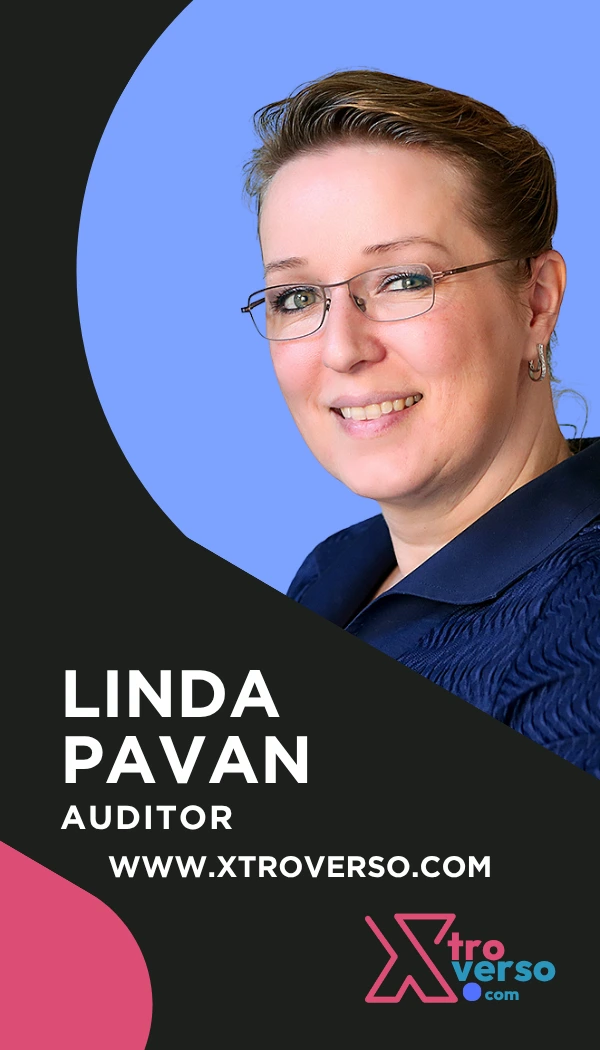

    in LINDA PAVAN
    # ES IT LEDGER Linda Pavan NL
    Linda Pavan March 4, 2026
    Share this post

    Share

    Linda Pavan

    Certified ZENTRIQ™ Auditor and co-founder of XTROVERSO™, Linda brings decades of expertise in ledger management and tax compliance. 

    With a rigorous yet pragmatic approach, she ensures financial systems are not just accurate, but aligned with transparency, trust, and long-term resilience.

    BOOK A MEETING

    Linda Pavan

    Gecertificeerd ZENTRIQ™ Auditor en medeoprichter van XTROVERSO™, brengt Linda tientallen jaren expertise mee in ledgerbeheer en fiscale compliance.

    Met een rigoureuze maar pragmatische aanpak zorgt zij ervoor dat financiële systemen niet alleen accuraat zijn, maar ook in lijn liggen met transparantie, vertrouwen en veerkracht op lange termijn.

    BOOK A MEETING

    Laura De Troia

    Laura, con la sua empatia naturale e il suo forte senso del servizio, fa sì che ogni cliente si senta ascoltato, supportato e valorizzato. È impegnata a costruire relazioni durature e porta chiarezza, calore e coerenza in ogni interazione, contribuendo a rafforzare la fiducia e ad elevare l’esperienza del cliente.

    BOOK A MEETING

    Laura De Troia

    Laura, con su empatía natural y su fuerte vocación de servicio, hace que cada cliente se sienta escuchado, acompañado y valorado. Está comprometida con la construcción de relaciones duraderas y aporta claridad, calidez y coherencia en cada interacción, contribuyendo a fortalecer la confianza y a elevar la experiencia del cliente.

    BOOK A MEETING

    Aurelija

    Aurelija, turinti natūralią empatiją ir stiprų rūpinimosi klientu jausmą, pasirūpina, kad kiekvienas klientas jaustųsi išgirstas, palaikomas ir vertinamas. Ji yra atsidavusi ilgalaikių santykių kūrimui, o kiekvienam kontaktui suteikia aiškumo, šilumos ir nuoseklumo, taip stiprindama pasitikėjimą ir dar labiau gerindama kliento patirtį.

    BOOK A MEETING

    Tags
    ES IT LEDGER Linda Pavan NL
    Our blogs
    • LINDA PAVAN
    • LAURA DE TROIA
    • BOOKKEEPING
    • VAT
    • INVOICING AND LEDGER
    • PAYROLL
    Your BV Is Not Your Wallet
    Why understanding the legal difference between a sole proprietorship, a VOF and a BV protects your cash, your contracts and your sleep
    XTROVERSO™

    Bookkeeping, tax, payroll, and company control for small businesses in the Netherlands.

    • 2017-26  © Xtroverso™ 
      KvK : 70402787 | BTW : NL 8583.07.790 B 01 | BECON : 685811 

    Explore
    • About 
    • Knowledge
    • Contact
    • FAQ
    • WORK WITH US
      Book Your Intake
    • Client Login
    Services
    • Scope of Work
    • Pricing
    • Employer & Payroll Support
    • Year-End & Board Reporting
    • Business Transition & Reconstruction Support
    Framework

    How XTROVERSO Works
    Why XTROVERSO Is Different
    Framework & Controls
    Verification & Compliance Checks
    Cultural Manifesto
    Client Journey
    Already a Client?

    Legal

    Terms & Conditions
    Data & Privacy Statement
    Cookie Policy

    An address must be specified for a map to be embedded


    XTROVERSO™ uses cookies to keep this site functional, secure, and properly maintained. 

    Necessary cookies support essential operation. 

    Optional cookies help us measure performance and improve clarity, usability, and relevance. 

    Choose the level you accept.

    Respecting your privacy is our priority.

    Allow the use of cookies from this website on this browser?

    We use cookies to provide improved experience on this website. You can learn more about our cookies and how we use them in our Cookie Policy.

    Allow all cookies
    Only allow essential cookies