Hey there, EU Freelancer! Let's Talk VIES Registration and Your Dutch Advantage
As a freelancer or business owner operating within the European Union, understanding the intricacies of VAT regulations is essential for smooth cross-border transactions. One key aspect that often gets overlooked is the importance of VIES (VAT Information Exchange System) registration. In this post, we'll explore why checking VIES registration is crucial when invoicing EU-based companies and how the process in the Netherlands differs from other EU countries.
What is VIES?
VIES, or the VAT Information Exchange System, is a search engine owned by the European Commission. It allows businesses to validate VAT registration numbers of their EU trading partners. This system is crucial for facilitating VAT-free intra-Community supplies of goods and services.
The Importance of Checking VIES Registration
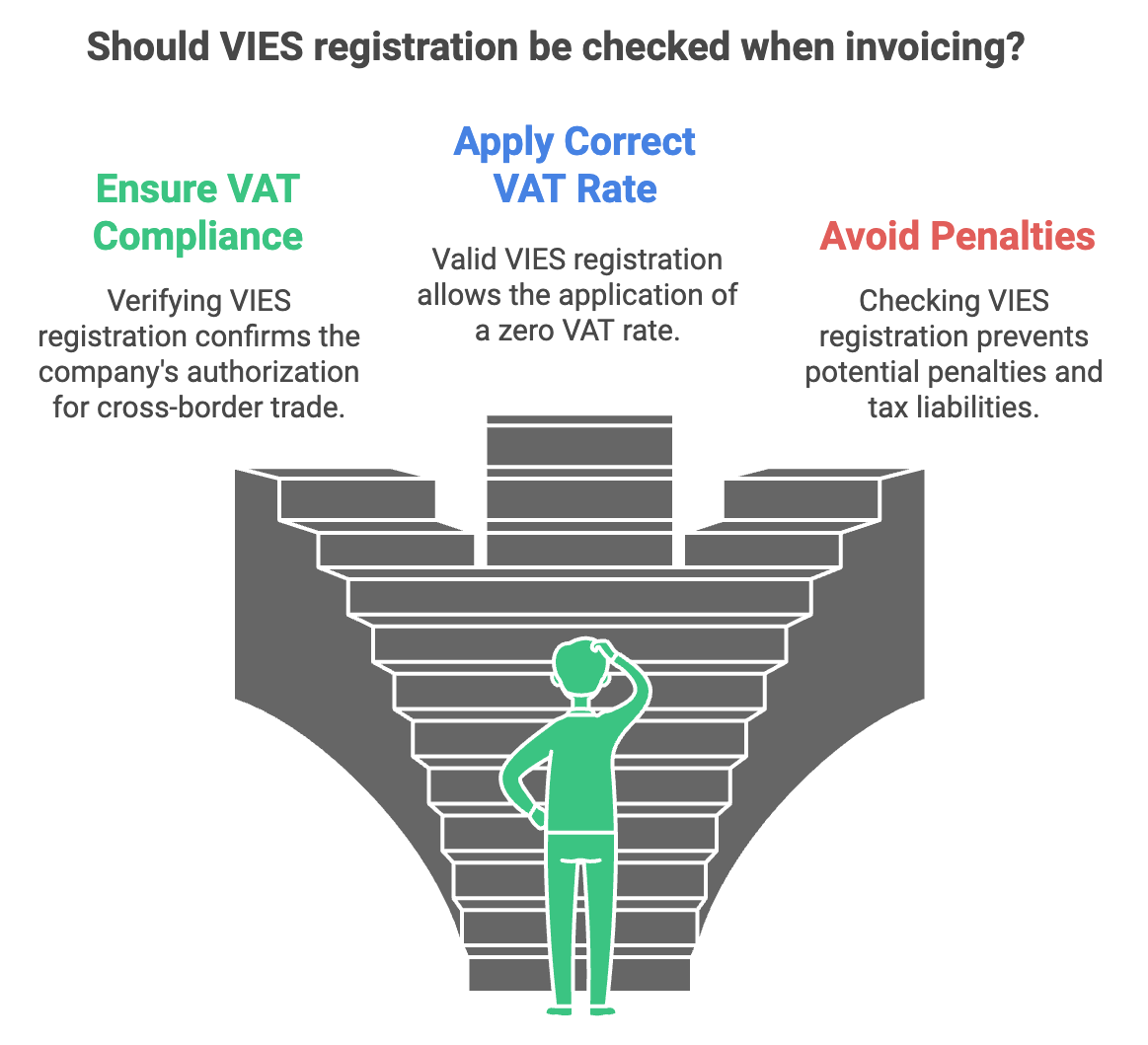
Ensuring VAT Compliance: When you're invoicing a company in another EU country, verifying their VIES registration is essential. It confirms that the company is authorized to engage in cross-border EU trade.
Applying the Correct VAT Rate: For B2B transactions within the EU, if the customer has a valid VIES registration, you can often apply a zero VAT rate (also known as "reverse charge" mechanism).
Avoiding Potential Penalties: Incorrectly applying VAT rules due to an invalid or non-existent VIES registration can lead to significant penalties and additional tax liabilities.
It's Not Always a Zero-Sum Game!
Here's the deal: Even if your customer is flashing a shiny, valid VIES registration, some of your services might still need that VAT charge. It's like a game of VAT roulette, but don't worry – we're here to help you win!
The "Where Are You?" VAT Rule
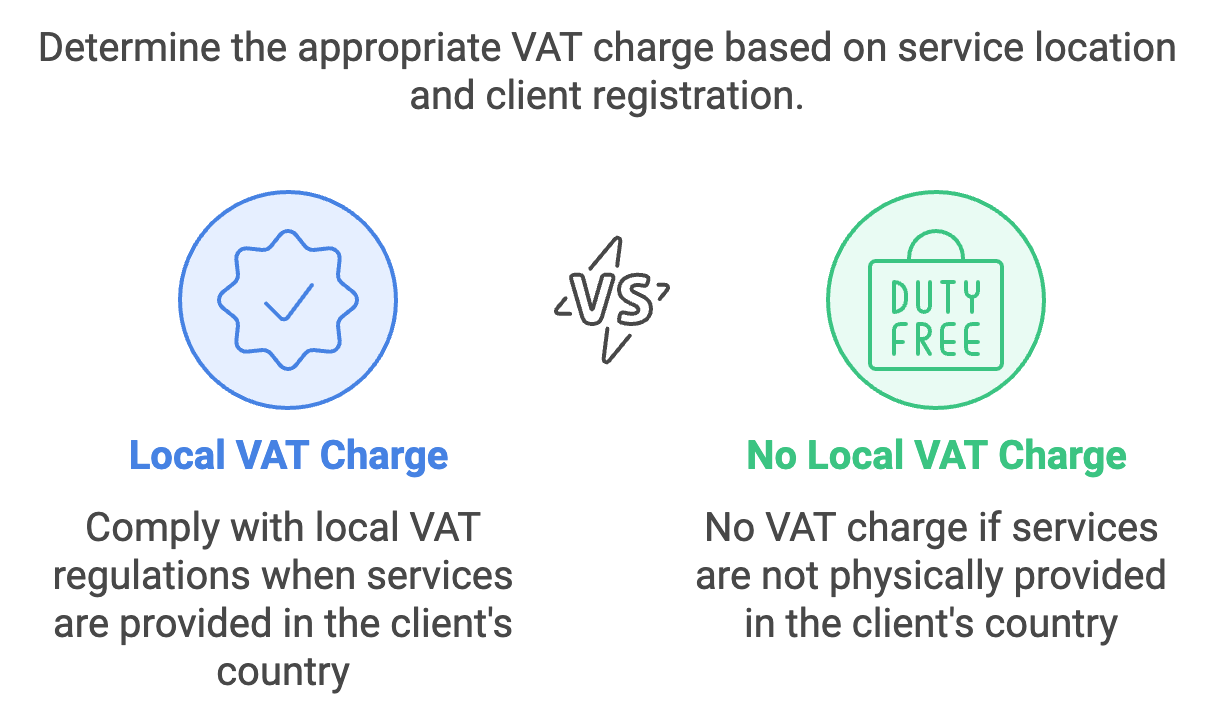
Here's a curveball for you: If you're providing services in your customer's country, you might need to brush up on their local VAT rules. That's right – you could be subject to their VAT regulations, not just the ones you're used to back home.
Let's break it down with an example:
Imagine you're a Dutch freelance web designer. You've got a German client (with a valid VIES number) who wants you to come to Berlin for a week to work on-site. Exciting stuff! But hold your horses – this isn't your typical zero-VAT situation.
Because you're physically providing services in Germany, you might need to charge German VAT, even though your client has a valid VIES registration. It's like VAT inception!
The Takeaway: Always Double-Check!
So, what's a savvy freelancer to do? Here's our X-Tax top tip: Always, always, ALWAYS check the specific VAT rules for:
- The type of service you're providing
- The country where you're providing the service
- The country where your client is based
It's like a VAT treasure hunt, but the prize is staying compliant and avoiding nasty surprises!
VIES Registration in the Netherlands vs. Other EU Countries
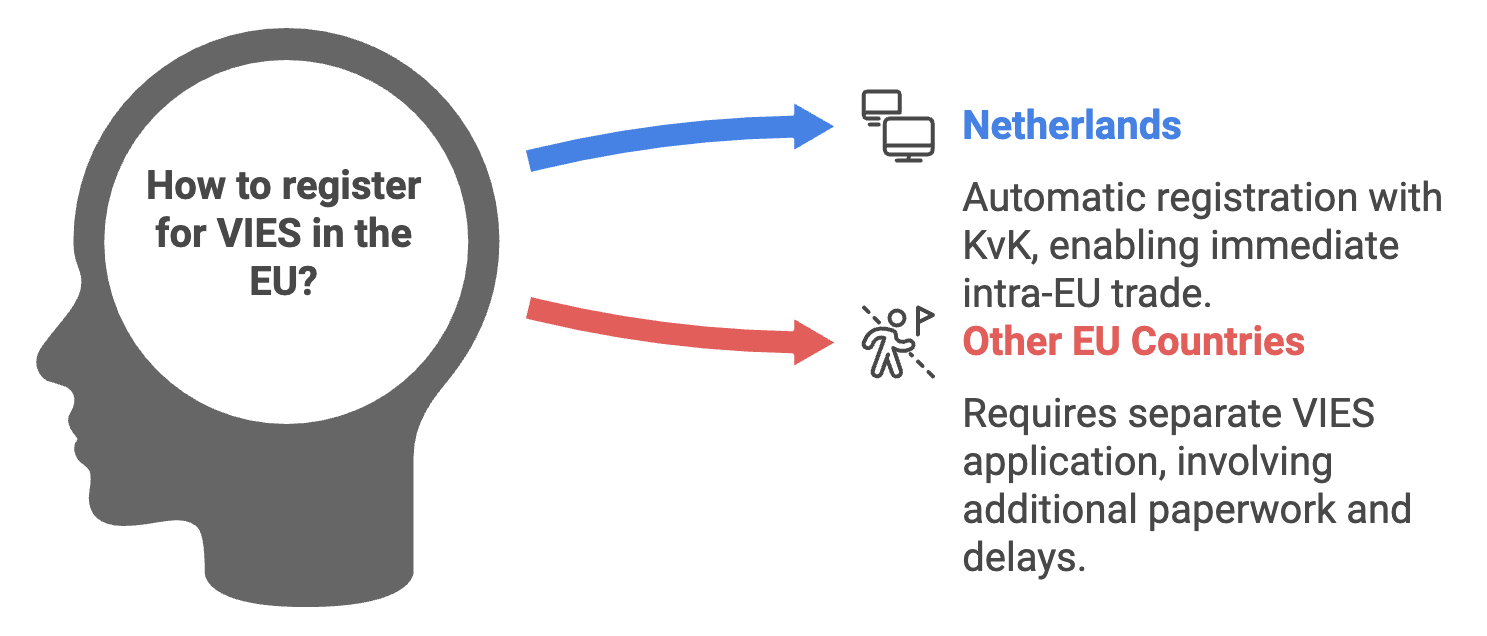
In the Netherlands, the VIES registration process is notably streamlined compared to many other EU countries. Here's how it differs:
Automatic Registration: When you register your company with the Dutch Chamber of Commerce in the Netherlands (KvK), you're automatically registered for VAT and included in the VIES system. This means Dutch companies can immediately engage in intra-EU trade without additional steps.
Other EU Countries: In contrast, many EU countries require a separate VIES registration process. Businesses often need to apply specifically for VIES after obtaining their VAT number, which can involve additional paperwork and waiting periods.
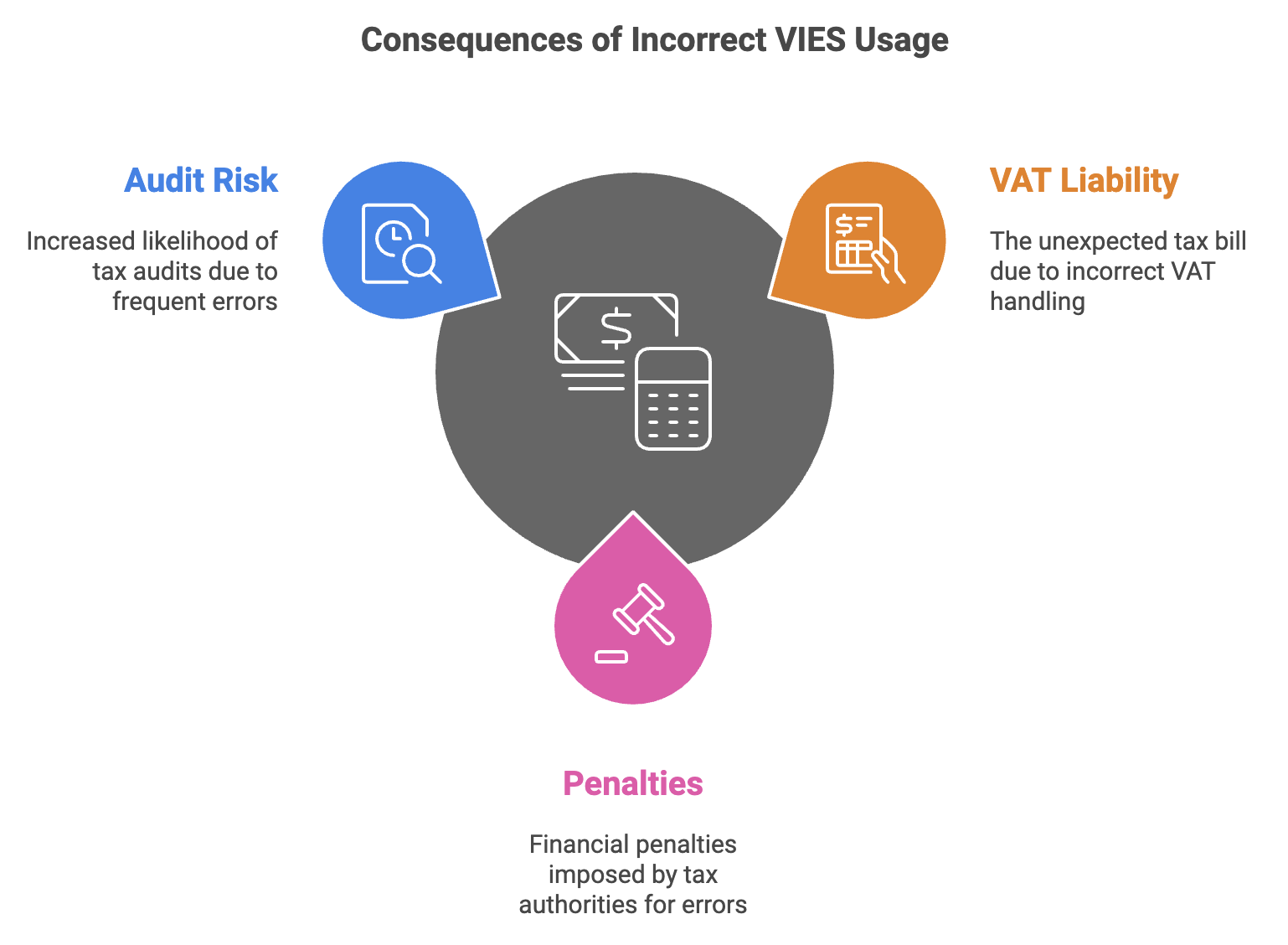
Consequences of Incorrect VIES Usage: A Deeper Dive
Let's face it VAT rules can be tricky, especially when dealing with cross-border transactions. But don't worry, we're here to break it down for you! Issuing an invoice with shifted VAT (zero-rated) to a customer not registered in VIES can have some pretty serious consequences. Let's explore these in more detail:
VAT Liability: The Unexpected Tax Bill
Imagine this scenario: You've issued a zero-rated invoice to an EU customer, thinking everything's fine. Months later, you discover they weren't VIES registered while submitting your ICP declaration. Uh-oh! Here's what happens:
- You become liable for the VAT that should have been charged originally.
- This isn't just a small oversight – we're talking about potentially owing 21% (in the Netherlands) of the invoice value to the tax authorities.
- Example: If you issued a €10,000 invoice, you could suddenly owe €2,100 in VAT!
The kicker? This comes straight out of your pocket. You can't go back to your customer months later asking for the VAT you should have charged. Ouch!
Penalties: When Mistakes Get Expensive
Tax authorities aren't known for their sense of humor, especially when it comes to VAT errors. Here's what you might face:
- Fines can vary, but they're often calculated as a percentage of the VAT owed.
- In some cases, you might see penalties of up to 100% of the VAT amount.
- Using our previous example, that €2,100 VAT bill could turn into a €4,200 nightmare!
- Some countries even impose fixed penalties for each incorrect invoice, regardless of the amount.
But it's not all doom and gloom! Many tax authorities consider whether the error was a genuine mistake or deliberate evasion. Being proactive and addressing the issue quickly can often help reduce penalties.
Audit Risk: Unwanted Attention from Tax Authorities
Nobody likes the sound of "tax audit," right? Well, frequent VAT errors can put you in the spotlight:
Tax authorities use sophisticated systems to flag inconsistencies in VAT reporting.If they notice a pattern of incorrect zero-rating, it could trigger a comprehensive audit. Audits aren't just about the VAT issues – they often expand to review all your tax affairs.This means hours spent gathering documents, explaining your processes, and potentially facing questions about other aspects of your business.
Best Practices for EU Invoicing
- ✅ Always verify the customer's VAT number using the official VIES portal before issuing a zero-rated invoice.
- 📁 Keep records of all VIES checks for your tax records.
- 🔄 Regularly review and update your customer database to ensure VAT information is current.
While the Netherlands offers a simplified VIES registration process, it's crucial for all EU businesses to understand and correctly use the VIES system. At Xtroverso, we're committed to helping freelancers navigate these complex VAT regulations. Remember, proper VIES usage not only ensures compliance but also facilitates smooth, penalty-free cross-border transactions.