Q: I run a small business in the Netherlands, do I really need to worry about e-invoicing now?
"Not yet, but you can’t ignore it either. From 2030, if you send invoices to customers in other EU countries, you’ll have to use e-invoicing no matter what. For invoices inside the Netherlands, the government hasn’t decided yet. The safest move? Just check how your invoices are set up today and ask your software provider if they’re preparing for the new rules. That way, when the changes come, you won’t be caught off guard."
For entrepreneurs who run micro and small companies, fiscal rules are never just about compliance, they are about survival, margins, and time. The debate on mandatory e-invoicing in the Netherlands is a perfect example. Brussels has already decided the long-term direction with ViDA (VAT in the Digital Age), but The Hague is still hesitating when it comes to domestic obligations. That hesitation has real consequences for the smallest businesses.
What is already certain: cross-border e-invoicing by 2030
From July 1, 2030, electronic invoicing will be mandatory for all cross-border B2B transactions within the EU. In practice, this means:
Invoices will follow a standardized digital format.
Data will be reported almost in real-time to tax authorities.
Accounting software will integrate invoices directly, reducing manual entry.
For small entrepreneurs who work with European suppliers or customers, there is no way around this. Whether you are a baker exporting to Belgium or a creative agency billing a client in Germany, digital invoicing will become part of your daily routine.
The Dutch hesitation: domestic transactions left open
The European directive allows Member States to extend the obligation to domestic B2B transactions. Countries like Italy, Belgium, France, Germany, and Spain are already moving forward. The Netherlands? Still weighing costs and burdens.
The government acknowledges the benefits of standardization, but at the same time fears the investment pressure this creates for small businesses. For now, the political line is: “not yet decided.” In other words, uncertainty remains the default.
Why this matters for micro and small companies
For a large multinational, dual systems (one for European invoices, another for Dutch ones) are annoying but manageable. For a small logistics company in Utrecht or a two-person consultancy in Groningen, it means:
Two sets of processes.
Higher costs for software and training.
Greater chance of errors, mismatches, and delays.
If The Hague waits too long, small companies risk being caught in the middle, forced to adapt twice: once for Europe, and again later if domestic e-invoicing is introduced.
Market pressure: software suppliers and consultants
It’s not just policy makers debating this. Large software providers like Exact, Unit4, Visma, Wolters Kluwer and Odoo are lobbying for a unified domestic obligation. Their logic is straightforward:
One standard means more efficiency.
Administrative work decreases.
VAT reporting becomes cleaner.
But for small companies, the issue is not theoretical efficiency, it’s concrete investment costs. Every euro spent on adapting systems is a euro not spent on staff, growth, or resilience.
The bigger picture: competitiveness and risk
Neighboring countries are already ahead. If the Netherlands waits too long, entrepreneurs here could end up with a more fragmented system, higher costs, and a riskier business environment. Deloitte estimates that VAT fraud still costs the Netherlands almost €2 billion annually. The political temptation to close that gap with e-invoicing is strong, but the question is: when will The Hague finally commit to a timeline?
What small entrepreneurs should do today
Even if the Dutch decision is postponed, cross-border obligations in 2030 are fixed. That means entrepreneurs should already prepare by:
Mapping your invoice flows: Know which invoices are domestic, which are cross-border, and how they are currently processed.
Checking your software: Ask your provider what preparations are underway for ViDA.
Improving data quality: E-invoicing relies on clean coding and reliable master data.
Following political signals: Parliamentary letters, consultations, and fiscal debates will shape the timeline.
Preparation doesn’t mean over-investing today. It means being agile, so that when the Dutch standard finally arrives, you’re ready to move, without panic and without unnecessary costs.
Conclusion: The need for clarity
For entrepreneurs, clarity is worth more than promises of efficiency. Every month of hesitation in The Hague is a month in which micro and small companies cannot plan investments with confidence.
E-invoicing is coming. The only real question is whether Dutch entrepreneurs will face one transition or two. The sooner policymakers decide, the fairer it will be for the smallest players in our economy, the ones who feel every euro and every regulation the hardest.
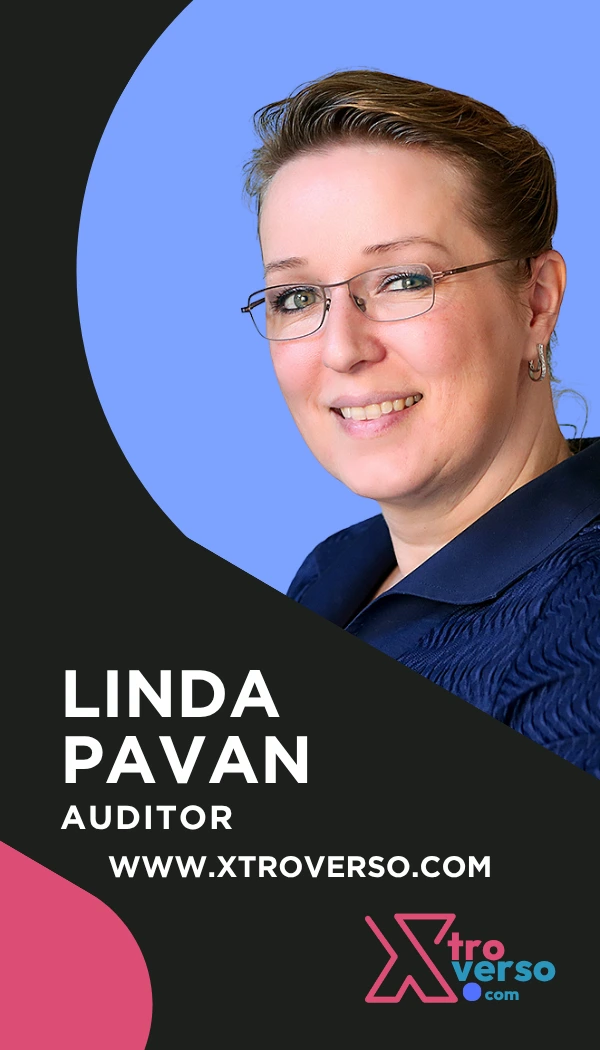
Co-Founder of Xtroverso | Head of Ledger and Tax Compliance
Linda Pavan brings disciplined precision to Xtroverso, anchoring its financial, fiscal, and operational integrity. As a ZENTRIQ™ Certified Auditor, she translates complexity into clarity, ensuring every decision is traceable, compliant, and strategically sound. Her quiet rigor empowers businesses to act with confidence and accountability.